So, you have been hearing a lot about Yoga Alliance certification for yoga teachers, right? And, many people may have told you, that it is a necessity if you want to become a successful yoga teacher. You have to get that RYT, quickly. Now, what is this RYT? Stop getting confused, as your questions are answered here. What is Yoga Alliance? So, how are Yoga Alliance and RYT connected? Yoga Alliance is a non-profit organization based in the US and has registered yoga schools and registered yoga teachers under its wings. Schools registered under the organization offer a standardized yoga syllabus. Teachers who complete YTTC from such schools can apply for Registered Yoga Teacher certification. The organization has over the years, built a flourishing yoga community without any geographic limitation. Moreover, there are so many yoga forms today, like Hatha Yoga, Ashtanga-Vinyasa Yoga, Yin Yoga, Power Yoga, and so on. People are coming up with their own derivatives. And, this seemingly confuses yoga enthusiasts. This is where the role of the Yoga Alliance assumes great importance. If you want to learn authentic yoga, and that too in a safe manner, you must join a school that is registered under Yoga Alliance. The organization also trains schools on ineffective business practices. Benefits of The Yoga Alliance Certification Before, you move forward, do keep one thing in mind. This registration for yoga schools is voluntary. There is no legality behind it. You can call it an internal standardization system. Yoga Alliance provides valuable lifelong guidance to students, who are certified. You also become a part of a yoga community, wherein you get access to quality yoga education at all times. The other benefits that come along with the certification are: What Does It Mean To Be An RYT? Is It Worth It? Registered Yoga Teacher or RYT certification implies, that you have received authentic yoga training. Moreover, you are deemed to have been trained under the strict guidelines of Yoga Alliance. You must complete the teacher training courses and get a completion certificate, to apply for RYT. The teacher training courses imply either of these: Yoga Alliance expects you to dedicate yourself to a period of yoga practice after the course. Most students apply for RYT within 3-6 months. An RYT gives you credibility in the yoga market and it is definitely worth it. However, those with other certifications and degrees also co-exist in the yoga job market. That does not make it any less valuable, though. Find out how. Levels Of Certification: RYT-200, RYT-300 RYT-500 How To Register In Yoga Alliance? This might scare you a bit! However, we have made it easy for you. Conclusion Once you receive your RYT certification, it stays with you lifelong. However, in order to maintain the RYT and the affiliation with Yoga Alliance, you are supposed to complete 45 hours of refresher training every 3 years and renew the registration annually. The RYS may also help you to complete the above process. So, do not hesitate to ask for assistance, if required.
Master the 10 Benefits of Seated Forward Bend (paschimottanasana )
What is Paschimottanasna? Paschimottasana is an important asana in yoga. You will hear the name Seated Forward Bend, associated with it. ‘Paschim’ means ‘west’, whereas ‘Uttana’ means ‘stretching’. It offers a full body stretch, that results in the lengthening of your spine. You have to enter this asana, through the Dandasana. This pose requires the practitioner to bend from the waist and stretch the hands to hold the feet or toes, whichever is comfortable. One can find a mention of this yoga asana in the Hatha Yoga Pradipika and Shiva Samhita. Seated Forward Bend Pose Step-By-Step: Modifications and Variations (Paschimottanasana) This asana looks quite easy. However, you may face a few challenges initially. It is best practiced in under-trained individuals. You can modify the posture in several ways. Know about the same here. You can also try the Urdhwa Paschimottasana, which is quite common today. In this pose, you have to lie straight on your back. Inhale and then stretch the legs towards the ceiling. Exhale and bring the feet back near your head. All this while, you have to ensure not to lift the back of the pelvis from the floor. You can use straps and cushions to help you out. Tips for Paschimottanasana: If you are a beginner, you can hold the asana or pose for 1-2 minutes. For more seasoned individuals, you can hold the pose for 2-10 minutes. Benefits of Paschimottanasana (the Seated Forward bend) Conclusion Thus, you can get multiple benefits from practicing this asana. It does appear slightly challenging at first. But as you practice, it will be easy. You will simply sink into the pose. However, you should always keep in mind, the tips for practice.
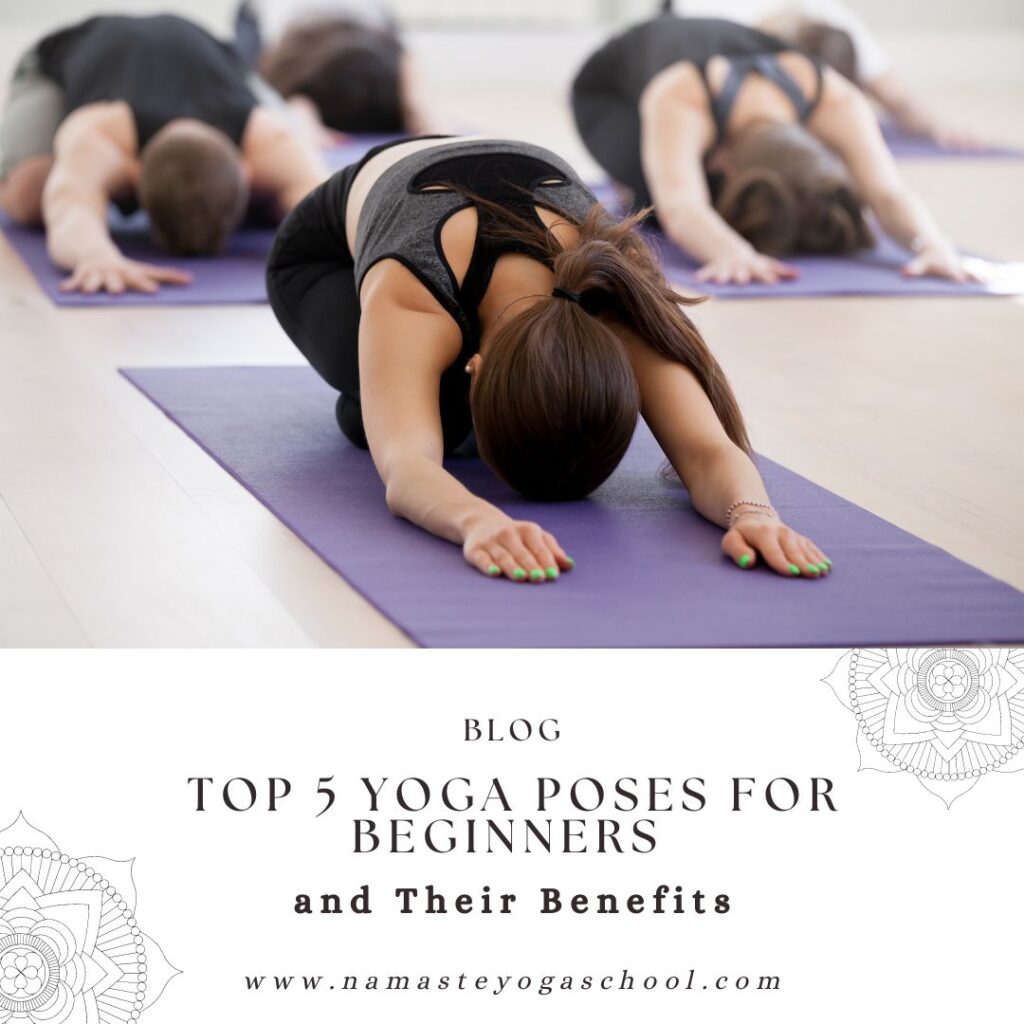
Top 5 Yoga Poses For Beginners and Their Benefits
Introduction To Yoga Poses For Beginners Yoga is an ancient scientific discipline that brings total healing to the mind, body, and spirit. Always omnipresent, this science has raised interest for centuries. Those who never practiced yoga before, have started doing it with full enthusiasm after knowing about its applications and benefits. Yoga suits people of all ages, backgrounds, or religions. Most of you may have seen the picture of Padmasana splashed across tabloids and magazines. Most websites have it as one of the representative images of yoga. However, yoga is not just about the body. It affects your very existence. If you are a beginner, you can start with simple poses. Yoga helps in endowing the practitioner with stability, flexibility, fitness, and agility. The best part about yoga is that, all these are not just limited to your physical body, but extend to mental capabilities as well. Tree pose (Vrksasana) The Tree pose is a balancing and grounding pose. Moreover, it helps in maintaining proper equilibrium. It is a beginner’s pose. You start in a standing position, with the feet firmly grounded. Make sure to distribute the weight of your body on both feet. Slowly, you can start shifting your body weight to the right foot. Lift the left foot, bend it at the knee, and place the sole of the left foot on the inner thigh of the opposite leg. Make sure that your hip does not jut out, in the process. Focus on any object in front of you. You can hold the hands in a ‘Namaste’ or ‘Anjali mudra’. This pose will help you to maintain stability. Do 5-10 breath counts and then slowly lower the feet. Return to the initial position and relax. Repeat on the other side. Downward-Facing Dog Pose (Adho Mukha Svanasana) This is an intermediate pose in yoga, but beginners can also practice it easily, with some guidance. It mainly replicates the posture of a dog, bending forward. You have to move into the table-top position, at first. Support your body weight on your palms and knees. Exhale and lift the hip up, straightening the legs in the process. You also need to straighten your hands. The body, at this point, must resemble an inverted. The hands are spaced according to the shoulder width, and the legs are hip-width apart. The toes point toward the front. You have to press your palms into the ground while widening the shoulder blades. Lengthen the neck, while keeping the ears and inner arms in close contact. You can focus on your navel in this pose. Hold the pose for at least 5-10 breath counts. Then, exhale and bend the knees like before and return to the original position. This yoga asana helps in increasing the length of the spine and also tones the muscles. The blood circulation towards the brain also increases. Warrior I Pose (Virabhadrasana I) This is an excellent asana for the spine, hips, thighs, and arms. It is named Virabhadra, after the fierce warrior incarnation of Lord Shiva. This posture improves the balance of the body and also cures frozen shoulders. You will also gain a lot of courage if you do this asana on a regular basis. You can navigate into the pose easily, from Tadasana. Separate the legs and create a space of 3-4 feet, while exhaling. You need to raise both hands to the level of the shoulders. The palms should be facing downward. Rotate the forward foot, so that it is perpendicular to your body. The back foot can rotate 45 degrees. Try to lift the ribs away from the pelvis. You will experience a lift in several parts of the body, once you do that. Hold the position for a few breath counts. Breathe normally throughout. Slowly, return to the original posture. Perform the same steps on the other side of the body. Mountain Pose (Tadasana) The Mountain pose is one of the most fundamental poses, which you can practice today. It has the power to strengthen the leg muscles, core muscles, and back muscles, as well. You will be practicing this pose at the beginning of a yoga session. It has the power to ground you and prepare the body for the tough conditions ahead. You learn to become resilient like the mountain. You must start in a simple standing position, with the feet a few inches apart. Stand straight, inhale, and lift your arms above your head. Lock the fingers of both hands. While lifting the arms, you must lift the heels off the ground, simultaneously. The entire body rests on the toes. You can hold this posture for 5-10 breath counts. Exhale, relax and slowly come down while releasing your finger lock. Place the hands by your side, as in the beginning. Child’s Pose (Balasana) The Child’s pose is a very gentle and therapeutic pose. Anyone who is recuperating from surgery or illness can also practice this asana. It stretches the lower back, hips, and thighs. You will be breathing deeply while doing this asana, and that is what lends a certain calmness to your state of being. You can start in a kneel down position, and from there, slowly bend forward, bringing your thighs and chest in contact. The hands have to be stretched and placed on the floor, in front. Your head will be supported by the ground. Breathe normally, while practicing this asana. You can connect with the hidden child inside you, through the regular practice of this pose.
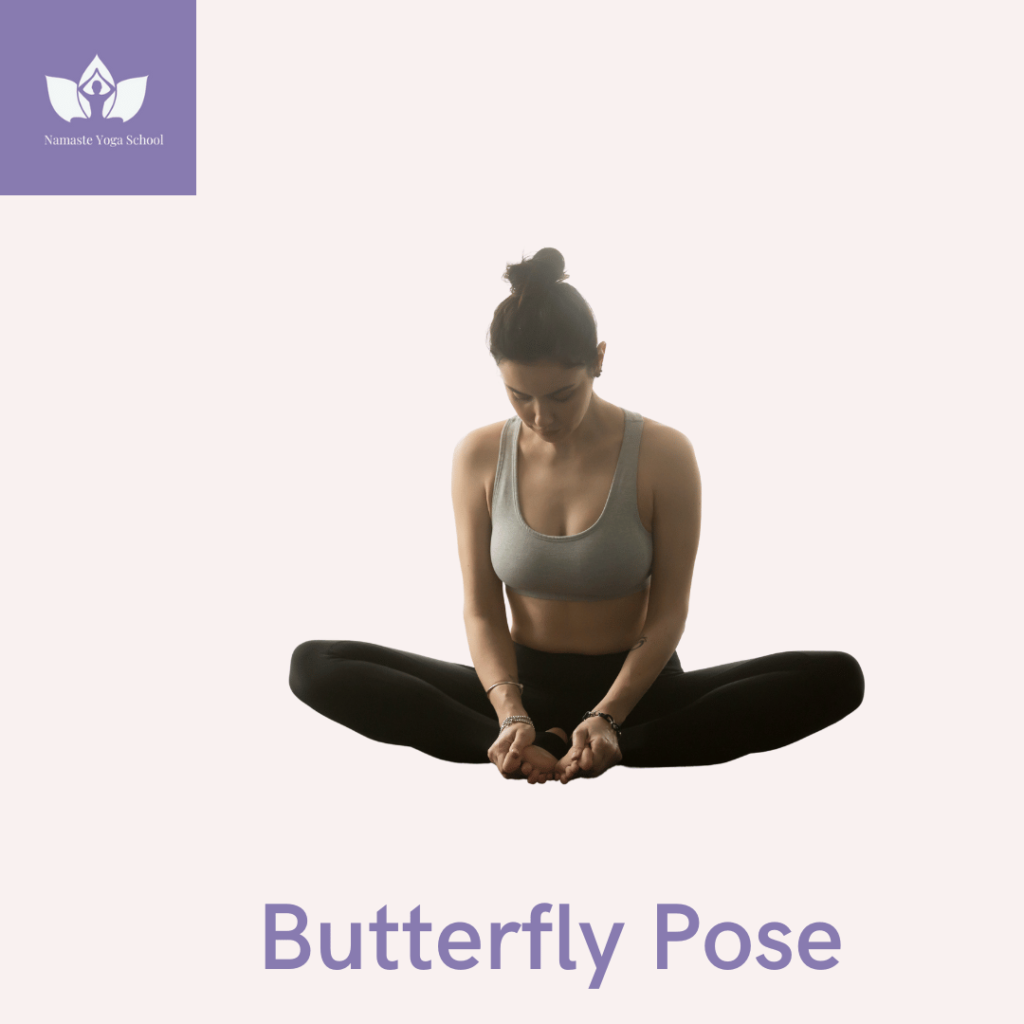
Benefits of Butterfly Pose – Badhakonasana
Butterfly pose (Baddha Konasana) The Butterfly pose is one of the simplest, yet most effective asanas that you can practice. Some yogic practitioners also call it the Bound Angle Pose. It is a beginner-friendly pose that delivers a lot. Here you will learn how to do the pose, to gain maximum returns. Additionally, you will also come across safe tips for practice, the benefits of butterfly pose, and some of the common mistakes that you can avoid. You will also come across several modifications and variations so that everyone can practice it. The contraindications are also listed below. How to Do Butterfly Pose: Tips for Beginners Health Benefits of Butterfly Pose (Baddha Konasana): Butterfly pose variations: Although the simple Butterfly pose is very effective on its own, you can add in a few variations to remove monotony. These postures can provide you with a whole lot of benefits. You can choose props, like blankets and cushions to help you practice the poses comfortably. Contraindications Of The Butterfly Pose Other Asanas Similar To The Butterfly Pose The Butterfly Pose is a great hip opener. Moreover, it gives you a lot of flexibility and assists with movement. However, there are many other poses, which have the same attributes. Do read about them here. Conclusion Baddha Konasana, Butterfly pose, or Bound Angle pose, no matter what you call it, is a beginner-level pose. It provides the practitioner with huge physical, mental, as well as emotional benefits. You can combine it with the other hip opening asanas or poses listed above. Seek guidance from professionals, to practice the asana safely in the initial days of your practice.
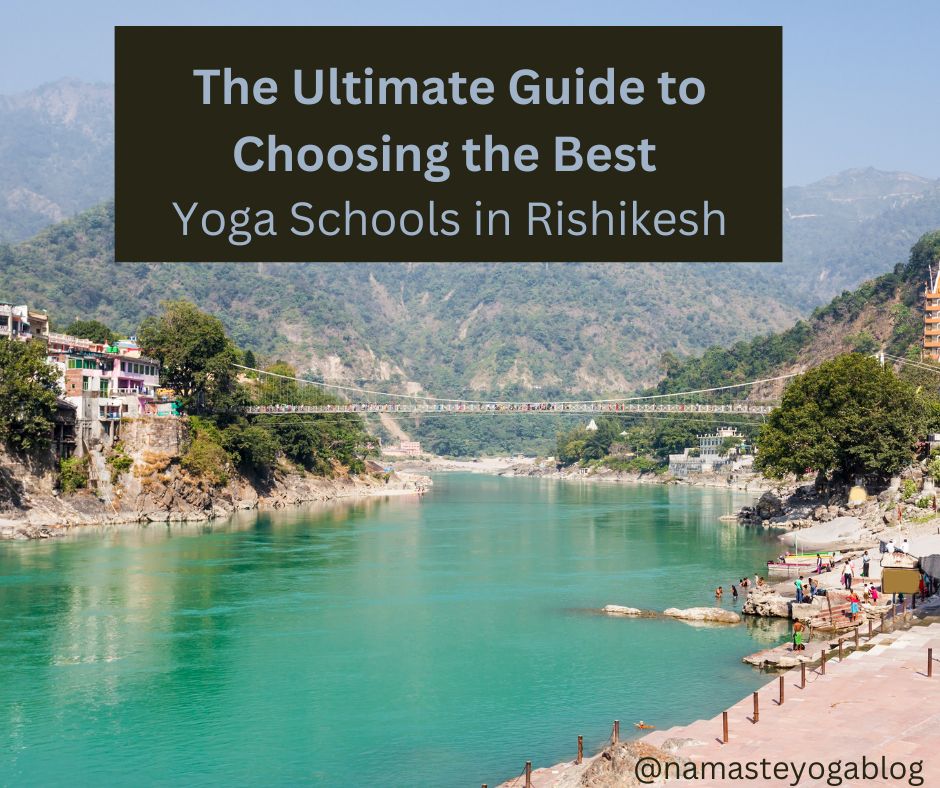
The Ultimate Guide to Choosing the Best Yoga School in Rishikesh-2024
If you look up the directory, you will find numerous yoga schools in Rishikesh. The reasonbeing, that it is the birthplace of yoga. You, as a yoga learner, may get confused on readingabout so many yoga courses. Moreover, you may have a difficult time, deciding which onewill suit you. We will provide you with the right parameters to choose an appropriate coursefor yourself, Understanding Your Yoga Goals: It’s critical to know what you hope to get out of your yoga practice before you look for a yoga school. Are you seeking spiritual development, physical fitness, or both? Do you wish to learn traditional or contemporary yoga? Finding a school with programs that support your objectives will be easier if you can find the answers to these questions. Researching Different Yoga Styles You will come across many yoga forms, like Hatha Yoga, Kundalini Yoga, Ashtanga Yoga, andVinyasa Yoga. Hatha Yoga covers all the other forms and is the basic yoga form that onemust learn, before navigating to other forms. Finding Reputable Yoga Schools in Rishikesh: Finding yoga schools that are reliable and provide top-notch programs might be difficult with so many possibilities. When assessing a yoga school, keep the following points in mind: Accreditation: Seek out yoga schools that have received this certification from reputable bodies like Yoga Alliance USA, AyushCheck the credentials and experience of the school’s professors and teachers.Examine the curriculum to make sure it includes instruction on yoga’s philosophy, anatomy, and practice, among other topics. Location: Think about the school’s location and whether it is convenient and accessible for you. Benefits of Attending a Yoga Course in Rishikesh Attending a yoga Course in Rishikesh has many benefits, including: Yoga School in Rishikesh Fees The Yoga School in Rishikesh fee structure for 200 Hour Yoga TTC starts from (699 USD to 1500 USD) depending upon the Accommodation and facilities the school provides. Top 5 Best Yoga Schools in Rishikesh Following thorough investigation and examination, we have created a list of the best yoga studios in Rishikesh: Parmarth Niketan: Parmarth Niketan is a true spiritual haven, lying on the holy banks of Mother Ganga in the lap of the lush Himalayas. It is the largest ashram in Rishikesh, providing its thousands of pilgrims who come from all corners of the Earth with a clean, pure, and sacred atmosphere as well as abundant, beautiful gardens. With several hundred rooms, the facilities are a perfect blend of modern amenities and traditional, spiritual simplicity. Parmarth Niketan is located in Swargashram, on the main road, just on the banks of the sacred Ganges River. Namaste Yoga School: Namaste Yoga School Is situated in the Yoga Capital of the World Rishikesh India Known as of the best yoga teacher training schools in Rishikesh for many years. Offering traditional Yoga teaching Training with our best yoga gurus as they guide you will not be disappointed when you choose to study with us. Our main focus is to guide each and every student in a proper way so that after that will complete the course they will independently lead the training teacher everywhere. We aim to create an open atmosphere and a special bond between the students, teachers, and our team. Namaste Yoga School has a reputation for the quality of our teachers, and facilities and for the loving, supportive style of our conducting classes. Rishikesh Yogpeeth: Rishikesh Yogpeeth has built Abhayaranya Yoga Ashram in the peaceful mountains of Rishikesh to facilitate yoga teacher training and retreats in India. The Ashram is built on modern lines, keeping international standards in mind yet attached to its cultural roots keeping the integrity of the yogic lifestyle intact. Besides imparting knowledge of yoga to teacher trainees, Abhayaranya Yoga Ashram in Rishikesh also provides health & wellness retreat facilities for those who wish to understand and experience yogic life and philosophies in a personal capacity and who would like to move towards a unique awakening of body, mind & spirit. Yoga Niketan: Yoga Niketan is one of the oldest Ashrams in Rishikesh. Situated on a gentle hill by the bank of the holy river Ganga, it was established in 1964 by Yogacharya Swami Yogeshwarananda Saraswati Maharaj Ji with the sole purpose of spreading yogvidya and spirituality in the world. Himalayan Yoga Association Himalayan Yoga Association is one of the most Reputed yoga schools in Rishikesh India run under the guidance of a very experienced yoga teacher from Rishikesh, India ( Yogi Himanshu ), He is the founder of HYA, Himalayan Yoga Association holds years of experience in teachings as well as management which helps participants to focus fully practice the practices of yoga while joining for the best yoga courses in Rishikesh India with HYA, school is located in one of the most beautiful places in Rishikesh all sides of Himalayan yoga association are surrounded by green mountains and river around, all prominent temples, ashram’s, waterfalls and main market are close and easily accessible. Conclusion To get the most out of your yoga practice, it’s crucial to pick the best yoga school in Rishikesh. You may choose the finest school for you by being aware of your objectives, investigating various teaching methods, assessing schools, and taking into account the advantages of attending a yoga school in Rishikesh.
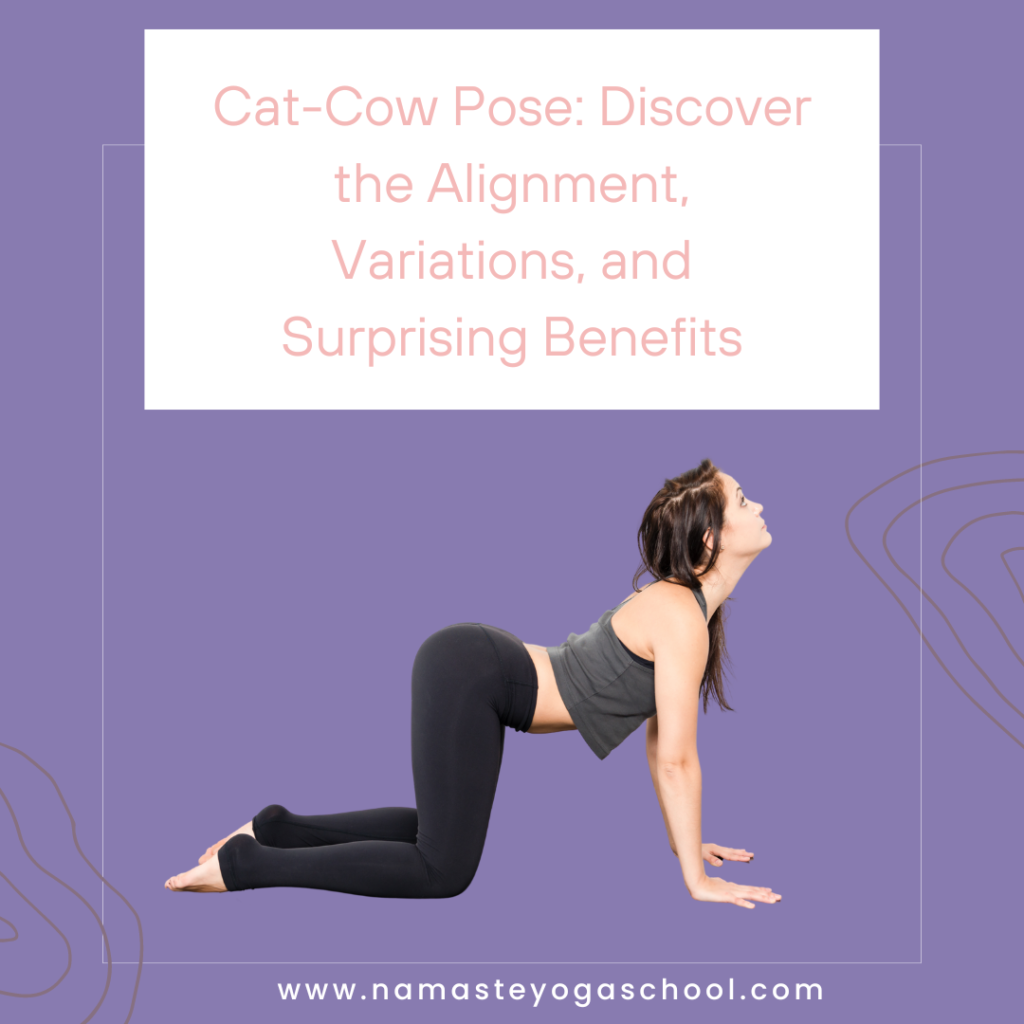
Cat-Cow Pose: Discover the Alignment, Variations, and Surprising Benefits
Cat-cow pose (Bitilasana Marjaryasana) The Cat-Cow Pose (Bitilasana Marjaryasana) is a simple and soothing yoga pose that is commonly used as a warm-up or as a transition between other poses. It is a fusion of two poses, the Cat Pose (Marjaryasana) and the Cow Pose (Bitilasana), done in a fluid and flowing motion. The pose (yoga asana) is commonly performed on all fours, with hands and knees on the ground. It has numerous health and mental benefits, including increasing spine flexibility and mobility, stimulating internal organs, and calming the mind. Cat-cow pose Benefits: The Cat-Cow Pose is helpful to both the body and the mind. Among the significant benefits are: Improving spine flexibility and mobility: The fluid movement between the Cat and Cow Poses stretches and strengthens the muscles of the spine, increasing flexibility and mobility. Internal organ stimulation: The movement of the pose massages stimulates the internal organs, which can improve digestion and elimination. Calming the mind: The pose’s soothing and flowing movement can help in the reduction of stress and anxiety. Back pain relief: The Cat-Cow Pose can help relieve back pain and tension by stretching the spine and back muscles. Improving posture: The pose helps to align the spine and improve posture, which can reduce muscle and joint strain. The flow between the Cat and Cow Poses can help to energize the body and wake up the mind, making it an ideal pose for starting the day or using in a morning yoga practice. Helps with neck and shoulder mobility: The Cat-Cow pose warms up the neck and shoulders, which improves mobility and relieves tension in these areas. How to do the cat-cow pose: Begin on your hands and knees, with your wrists under your shoulders and your knees under your hips. Lift your head and tailbone towards the ceiling as you inhale, arching your back. This is known as the Cow Pose. Exhale by rounding your spine and tucking your chin into your chest, bringing your tailbone to your knees. This is known as the Cat Pose. Continue to move smoothly between the Cat and Cow Poses, inhaling into the Cow Pose and exhaling into the Cat Pose. Focus on moving with the breath and allowing the movement to be smooth and flowing as you move in the Cat-Cow Pose. Repeat the pose for 5-10 rounds or as many as you feel comfortable with. To release the pose, simply release it and return to a neutral position on your hands and knees. Tips for proper alignment cat-cow pose: Here is some point for proper Cat-Cow alignment: Wrist alignment: To avoid wrist strain, make sure your wrists are directly under your shoulders. Knee alignment: To maintain stability and balance in the pose, keep your knees hip-width apart and directly under your hips. Spinal alignment: Maintain a neutral spine throughout the pose, avoiding over-arching or over-rounding the spine. Shoulder alignment: During the pose, keep your shoulders relaxed and avoid hunching or tensing them. Head and neck alignment: Keep your neck and head in line with your spine during the pose and avoid straining or tensing them. Breathing: Use your breath to help guide your pose movement. Allow for a smooth and steady breathing pattern. Engage your core: To maintain stability and balance, keep your core engaged throughout the pose. Concentrate on the movement: When switching between Cat and Cow Pose, concentrate on the movement and keep a steady pace. By following these guidelines, you can help ensure proper alignment in the Cat-Cow Pose and get the most out of the pose while lowering your risk of injury. Always listen to your body and stop if you experience any discomfort or pain. Cat cow pose variations: Cat-Cow with a Twist: This variation twists the spine, stretching and opening up the ribcage and shoulders. Inhale as you lift your right arm and left leg, twisting through your torso, starting in a neutral tabletop position. Exhale as you return to the tabletop. Rep on the opposite side. Cat-Cow with a Reach: This variation adds an arms reach to the pose, allowing the shoulders and upper back to stretch. Inhale as you lift your head and tailbone and reach forward with one arm, starting in a neutral tabletop position. Exhale as you return to the tabletop. Rep on the opposite side. Cat-Cow with a Leg Extension: This variation adds a leg extension to the pose, allowing the hips and legs to stretch. Inhale as you lift your head and tailbone and extend one leg straight behind you, starting in a neutral tabletop position. Exhale as you return to the tabletop. Rep on the opposite side. Cat-Cow with a Clasp: A clasp is added to the pose to help stretch the shoulders and upper back. Inhale as you lift your head and tailbone and clasp your hands behind your back, starting in a neutral tabletop position. Exhale as you return to the tabletop. Cat-Cow with a Knee Tuck: A knee tuck is added to the pose to help stretch the hips and lower back. Inhale as you lift your head and tailbone and tuck one knee towards your chest from a neutral tabletop position. Exhale as you return to the tabletop. Rep on the opposite side. It’s important to note that before attempting these variations, you should be familiar with and comfortable with the basic Cat-Cow pose. Always listen to your body and don’t push yourself past your limits. Precautions and Contradictions of Cat-Cow Pose:
Top 10 Yoga Poses To Help Relieve Shoulder And Neck Pain
You will come across a lot of people, who suffer from neck and shoulder pain today. It is the lifestyle factors and the postural mistakes, that are mainly behind neck and shoulder pain. Those of you who are athletes may face such injuries every now and then. Reasons For Neck and Shoulder Pain Here are a few reasons, why neck and shoulder pain occur. These are just a few of the reasons, why you may feel neck and shoulder pain. You will find yogic cures aplenty, You just need to find out, which one will address your problems. Top 10 Yoga Poses For Neck and Shoulder Pain Now you can learn and master such poses at Namaste Yoga School. Get the best benefits from the yogic discipline at the hands of learned masters.
Discover the Foundations of Yoga: Yama and Niyamas
According to yogi tradition, there are eight limbs of yoga that are ethical guidelines and practices that are necessary for the transition from the outer to the inner. These guidelines were set out in the classical yoga text, Yoga Sutra by Patanjali. Peacefulness and oneness can be obtained through this transition. Yoga is a lifestyle that requires the ability to be free from what we think we know. The limbs are related to all aspects of human existence and can be practiced in synchrony or separately. Each is as important as the next. The Eight Limbs of Yoga Are: 1.Yama 2. Niyamas 3. Asana 4. pranayama 5. pratyahara 6. Dharana 7.Samadhi The Yamas and niyamas are the foundations of yoga and are a type of living and being. These are important as they must be achieved in order to transition into further practices and ultimately reach a union. Yamas are defined as self-constraints or controls. They are a way in which we impede our thoughts, language, emotions, and actions with regard to how we interact with others or our surroundings and nature. They remind us that we are all connected. Niyamas are inner restraints so refer to our daily activities, our attitudes, emotions, and thoughts toward ourselves. Yama and niyamas are necessary in daily life as they allow us to cultivate a more present and conscious way of living. They are guidelines for moral and ethical conduct, but they bring our awareness towards our actions and thoughts. Meaning they provide us with a more mindful existence. It is only through this path that we become a more present human and are able to cultivate a healthy life and feeling of contentment. Our quality of life is dependent on our quality of living and the yamas and niyamas help us to improve that quality of living. Yamas and Niyamas are more related to yoga off the mat as they give us a framework for a higher experience of existing, but they also improve our experience on the mat as they allow us to improve the other limbs of yoga, such as pranayama, pratyahara and meditation. Ultimately helping us reach samadhi, ‘union’ or oneness. However, without the practice of yamas and niyamas, asana practice is merely an act of physical movement. We must be strong in these first in order to achieve yoga completely. There are ten yamas and niyamas. Five of each. One of the Yamas is Satya which is defined as truthfulness, being honest to our self and being true to others. Acting with strong moral principles and not concealing or exaggerating the truth to make yourself feel or be perceived better. In essence we should not distort our reality in our expressions or actions to anyone. Satya is not just associated with the truth but also was we perceive the truth to be based on our own options. One way we can practice this is by being silent and listen to what our thoughts are telling us. In this way we can determine what information we are listening to before asking ourselves whether we are speaking the truth or letting our prejudice dictate our intentions. Just because we think we know something, it does not make it the truth. As Satya is a restraint it refers to one’s ability to refrain from untruthfulness and thus it must be done with extreme awareness. It is about being cautious with our words and thoughts. Satya is the second yama and works in harmony with the first being ahimsa which means non-violence to others, nature and our surroundings. Satya is about slowing down so that when we choose to use certain words or thoughts they are in line with ahimsa. You can be truthful without harming others and you can be non-violent by being truthful. These two things should be in line and complement one another. Ultimately it is the way we communicate our truths that make them unharmful. Off the mat Satya can be very powerful as it is self-transformative. We speak our truths and they are more likely to come true. On the mat, asana and pranayama for example, are more open and powerful if you are truthful with the people around you and yourself. The Yamas and niyamas if done correctly are a profound tool towards improving the health of our body but also our mind. They lay the foundations for a more peaceful way of living and are thus very important for our health and well-being. The ten yamas and niyamas are universal gift according to yoga traditions. They are not confined by class, where you live, your experience or time. However, they have religious roots and are practiced in Hindi religion and Buddhist philosophy. In the Upanishads, the ancient Hindi teaching and philosophy, there are twenty codes of proper conduct and practices recorded in the final section, Vedas. Ten are yamas which include some that are present in yoga teaching, for example, ahimsa and Satya but also include other teachings such as Daya for compassion and Mitahara for diet. There are also ten niyamas or observations. They also include some similarities for instance tapas for discipline or austerity. But included may other teachings such as Dana for charity and Astikaya for faith. Buddhist philosophy also shares the same goals. According to ‘The five Precepts in Buddism’ by Thich Nhat Hanh, there are parallel views with the yoga principles of yamas and niyamas. These five precepts are no killing, no lying, no stealing, no sexual misconduct, no intoxicants. Closely mirroring the yamas found in yoga sutra.