Author name: Swaraj

Swaraj Ji is an experienced practitioner of Nada Yoga. He is specialised in music therapy, speech therapy, sound and chakra healing. Additionally he is a teacher of Meditation in the Bhakti Tradition as well as a Yoga Alliance certified teacher of hatha and Kundalini Yoga System.

Cat-Cow Pose
Yoga Poses

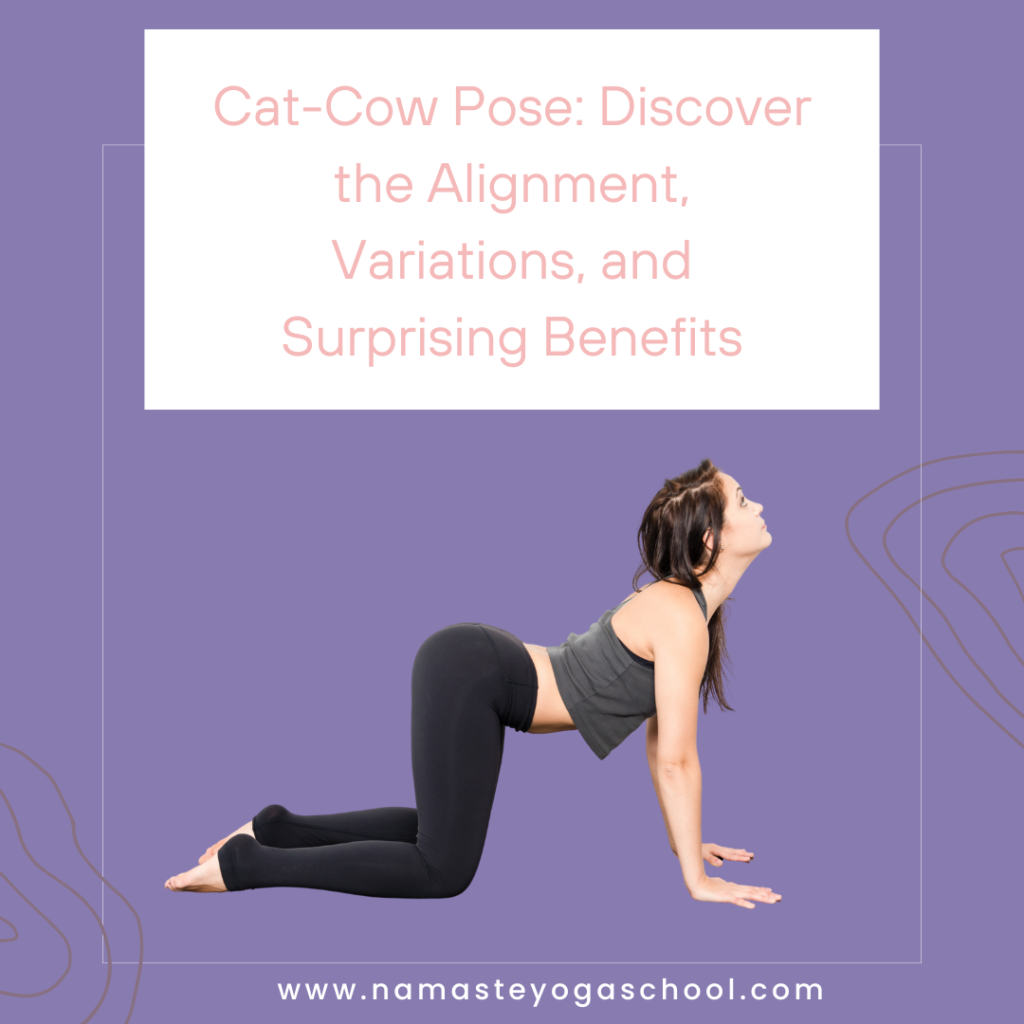
Cat-Cow Pose: Discover the Alignment, Variations, and Surprising Benefits

Cat-cow pose (Bitilasana Marjaryasana) The Cat-Cow Pose (Bitilasana Marjaryasana) is a simple and soothing yoga pose that is commonly used as a warm-up or as a transition between other poses. It is a fusion of two poses, the Cat Pose (Marjaryasana) and the Cow Pose (Bitilasana), done in a fluid and flowing motion. The pose (yoga asana) is commonly performed on all fours, with hands and knees on the ground. It has numerous health and mental benefits, including increasing spine flexibility and mobility, stimulating internal organs, and calming the mind. Cat-cow pose Benefits: The Cat-Cow Pose is helpful to both the body and the mind. Among the significant benefits are: Improving spine flexibility and mobility: The fluid movement between the Cat and Cow Poses stretches and strengthens the muscles of the spine, increasing flexibility and mobility. Internal organ stimulation: The movement of the pose massages stimulates the internal organs, which can improve digestion and elimination. Calming the mind: The pose’s soothing and flowing movement can help in the reduction of stress and anxiety. Back pain relief: The Cat-Cow Pose can help relieve back pain and tension by stretching the spine and back muscles. Improving posture: The pose helps to align the spine and improve posture, which can reduce muscle and joint strain. The flow between the Cat and Cow Poses can help to energize the body and wake up the mind, making it an ideal pose for starting the day or using in a morning yoga practice. Helps with neck and shoulder mobility: The Cat-Cow pose warms up the neck and shoulders, which improves mobility and relieves tension in these areas. How to do the cat-cow pose: Begin on your hands and knees, with your wrists under your shoulders and your knees under your hips. Lift your head and tailbone towards the ceiling as you inhale, arching your back. This is known as the Cow Pose. Exhale by rounding your spine and tucking your chin into your chest, bringing your tailbone to your knees. This is known as the Cat Pose. Continue to move smoothly between the Cat and Cow Poses, inhaling into the Cow Pose and exhaling into the Cat Pose. Focus on moving with the breath and allowing the movement to be smooth and flowing as you move in the Cat-Cow Pose. Repeat the pose for 5-10 rounds or as many as you feel comfortable with. To release the pose, simply release it and return to a neutral position on your hands and knees.   Tips for proper alignment cat-cow pose: Here is some point for proper Cat-Cow alignment: Wrist alignment: To avoid wrist strain, make sure your wrists are directly under your shoulders. Knee alignment: To maintain stability and balance in the pose, keep your knees hip-width apart and directly under your hips. Spinal alignment: Maintain a neutral spine throughout the pose, avoiding over-arching or over-rounding the spine. Shoulder alignment: During the pose, keep your shoulders relaxed and avoid hunching or tensing them. Head and neck alignment: Keep your neck and head in line with your spine during the pose and avoid straining or tensing them. Breathing: Use your breath to help guide your pose movement. Allow for a smooth and steady breathing pattern. Engage your core: To maintain stability and balance, keep your core engaged throughout the pose. Concentrate on the movement: When switching between Cat and Cow Pose, concentrate on the movement and keep a steady pace. By following these guidelines, you can help ensure proper alignment in the Cat-Cow Pose and get the most out of the pose while lowering your risk of injury. Always listen to your body and stop if you experience any discomfort or pain. Cat cow pose variations: Cat-Cow with a Twist: This variation twists the spine, stretching and opening up the ribcage and shoulders. Inhale as you lift your right arm and left leg, twisting through your torso, starting in a neutral tabletop position. Exhale as you return to the tabletop. Rep on the opposite side. Cat-Cow with a Reach: This variation adds an arms reach to the pose, allowing the shoulders and upper back to stretch. Inhale as you lift your head and tailbone and reach forward with one arm, starting in a neutral tabletop position. Exhale as you return to the tabletop. Rep on the opposite side. Cat-Cow with a Leg Extension: This variation adds a leg extension to the pose, allowing the hips and legs to stretch. Inhale as you lift your head and tailbone and extend one leg straight behind you, starting in a neutral tabletop position. Exhale as you return to the tabletop. Rep on the opposite side. Cat-Cow with a Clasp: A clasp is added to the pose to help stretch the shoulders and upper back. Inhale as you lift your head and tailbone and clasp your hands behind your back, starting in a neutral tabletop position. Exhale as you return to the tabletop. Cat-Cow with a Knee Tuck: A knee tuck is added to the pose to help stretch the hips and lower back. Inhale as you lift your head and tailbone and tuck one knee towards your chest from a neutral tabletop position. Exhale as you return to the tabletop. Rep on the opposite side. It’s important to note that before attempting these variations, you should be familiar with and comfortable with the basic Cat-Cow pose. Always listen to your body and don’t push yourself past your limits. Precautions and Contradictions of Cat-Cow Pose:  
TOP10 Yoga Poses To Help Relieve Shoulder And Neck Pain
yoga, Yoga Poses

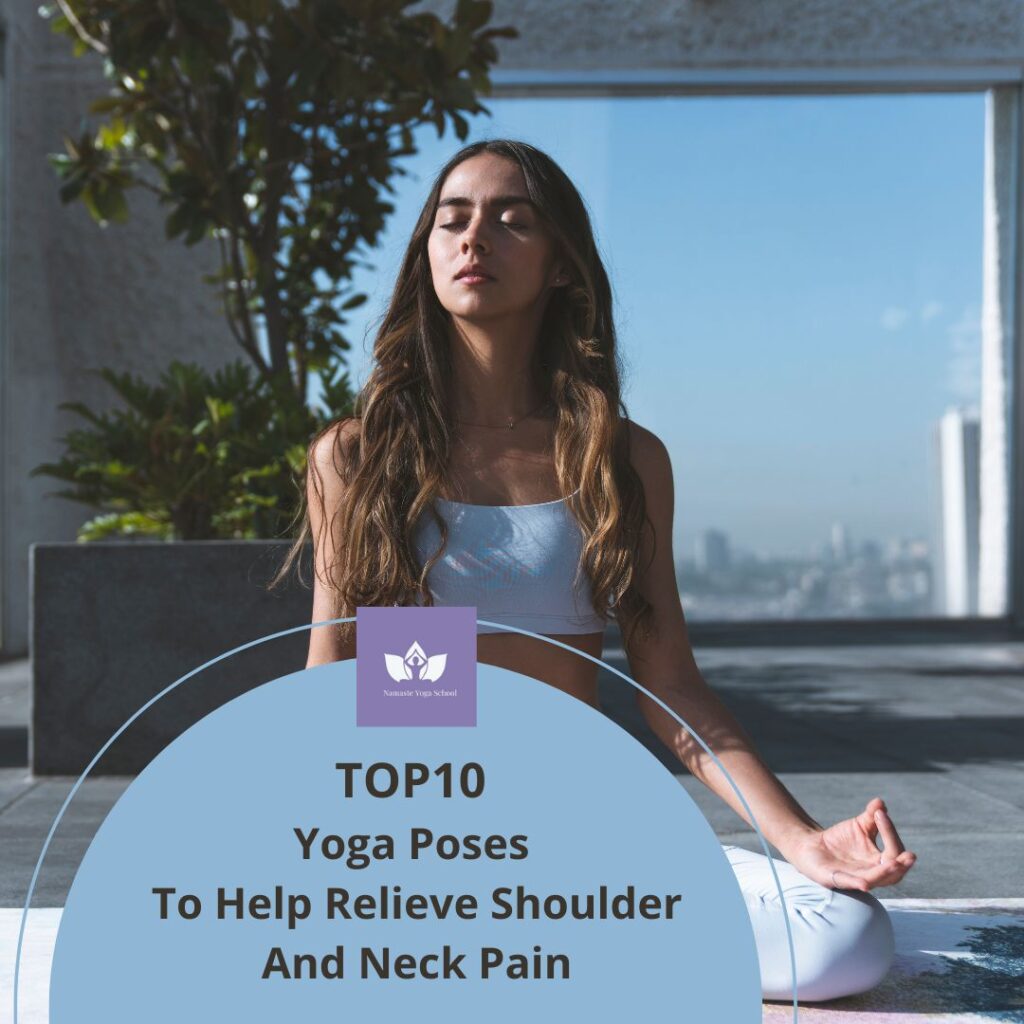
Top 10 Yoga Poses To Help Relieve Shoulder And Neck Pain

You will come across a lot of people, who suffer from neck and shoulder pain today. It is the lifestyle factors and the postural mistakes, that are mainly behind neck and shoulder pain. Those of you who are athletes may face such injuries every now and then. Reasons For Neck and Shoulder Pain  Here are a few reasons, why neck and shoulder pain occur.  These are just a few of the reasons, why you may feel neck and shoulder pain.  You will find yogic cures aplenty, You just need to find out, which one will address your problems.  Top 10 Yoga Poses For Neck and Shoulder Pain  Now you can learn and master such poses at Namaste Yoga School. Get the best benefits from the yogic discipline at the hands of learned masters. 

kundalini yoga teacher training
yoga

Discover the Foundations of Yoga: Yama and Niyamas

According to yogi tradition, there are eight limbs of yoga that are ethical guidelines and practices that are necessary for the transition from the outer to the inner. These guidelines were set out in the classical yoga text, Yoga Sutra by Patanjali. Peacefulness and oneness can be obtained through this transition. Yoga is a lifestyle that requires the ability to be free from what we think we know. The limbs are related to all aspects of human existence and can be practiced in synchrony or separately. Each is as important as the next. The Eight Limbs of Yoga Are: 1.Yama 2. Niyamas 3. Asana 4. pranayama 5. pratyahara 6. Dharana 7.Samadhi The Yamas and niyamas are the foundations of yoga and are a type of living and being. These are important as they must be achieved in order to transition into further practices and ultimately reach a union. Yamas are defined as self-constraints or controls. They are a way in which we impede our thoughts, language, emotions, and actions with regard to how we interact with others or our surroundings and nature. They remind us that we are all connected. Niyamas are inner restraints so refer to our daily activities, our attitudes, emotions, and thoughts toward ourselves. Yama and niyamas are necessary in daily life as they allow us to cultivate a more present and conscious way of living. They are guidelines for moral and ethical conduct, but they bring our awareness towards our actions and thoughts. Meaning they provide us with a more mindful existence. It is only through this path that we become a more present human and are able to cultivate a healthy life and feeling of contentment. Our quality of life is dependent on our quality of living and the yamas and niyamas help us to improve that quality of living. Yamas and Niyamas are more related to yoga off the mat as they give us a framework for a higher experience of existing, but they also improve our experience on the mat as they allow us to improve the other limbs of yoga, such as pranayama, pratyahara and meditation. Ultimately helping us reach samadhi, ‘union’ or oneness. However, without the practice of yamas and niyamas, asana practice is merely an act of physical movement. We must be strong in these first in order to achieve yoga completely. There are ten yamas and niyamas. Five of each. One of the Yamas is Satya which is defined as truthfulness, being honest to our self and being true to others. Acting with strong moral principles and not concealing or exaggerating the truth to make yourself feel or be perceived better. In essence we should not distort our reality in our expressions or actions to anyone. Satya is not just associated with the truth but also was we perceive the truth to be based on our own options. One way we can practice this is by being silent and listen to what our thoughts are telling us. In this way we can determine what information we are listening to before asking ourselves whether we are speaking the truth or letting our prejudice dictate our intentions. Just because we think we know something, it does not make it the truth. As Satya is a restraint it refers to one’s ability to refrain from untruthfulness and thus it must be done with extreme awareness. It is about being cautious with our words and thoughts. Satya is the second yama and works in harmony with the first being ahimsa which means non-violence to others, nature and our surroundings. Satya is about slowing down so that when we choose to use certain words or thoughts they are in line with ahimsa. You can be truthful without harming others and you can be non-violent by being truthful. These two things should be in line and complement one another. Ultimately it is the way we communicate our truths that make them unharmful. Off the mat Satya can be very powerful as it is self-transformative. We speak our truths and they are more likely to come true. On the mat, asana and pranayama for example, are more open and powerful if you are truthful with the people around you and yourself. The Yamas and niyamas if done correctly are a profound tool towards improving the health of our body but also our mind. They lay the foundations for a more peaceful way of living and are thus very important for our health and well-being. The ten yamas and niyamas are universal gift according to yoga traditions. They are not confined by class, where you live, your experience or time. However, they have religious roots and are practiced in Hindi religion and Buddhist philosophy. In the Upanishads, the ancient Hindi teaching and philosophy, there are twenty codes of proper conduct and practices recorded in the final section, Vedas. Ten are yamas which include some that are present in yoga teaching, for example, ahimsa and Satya but also include other teachings such as Daya for compassion and Mitahara for diet. There are also ten niyamas or observations. They also include some similarities for instance tapas for discipline or austerity. But included may other teachings such as Dana for charity and Astikaya for faith. Buddhist philosophy also shares the same goals. According to ‘The five Precepts in Buddism’ by Thich Nhat Hanh, there are parallel views with the yoga principles of yamas and niyamas. These five precepts are no killing, no lying, no stealing, no sexual misconduct, no intoxicants. Closely mirroring the yamas found in yoga sutra.

About Us

Namaste Yoga School is dedicated to providing a comprehensive yoga experience for people of all abilities. Our reputation as a trustable yoga retreat and teacher training centre is built on our dedication to promoting healthy and contented lifestyles through yoga.

Location

© 2024 Namaste Yoga School

Scroll to Top